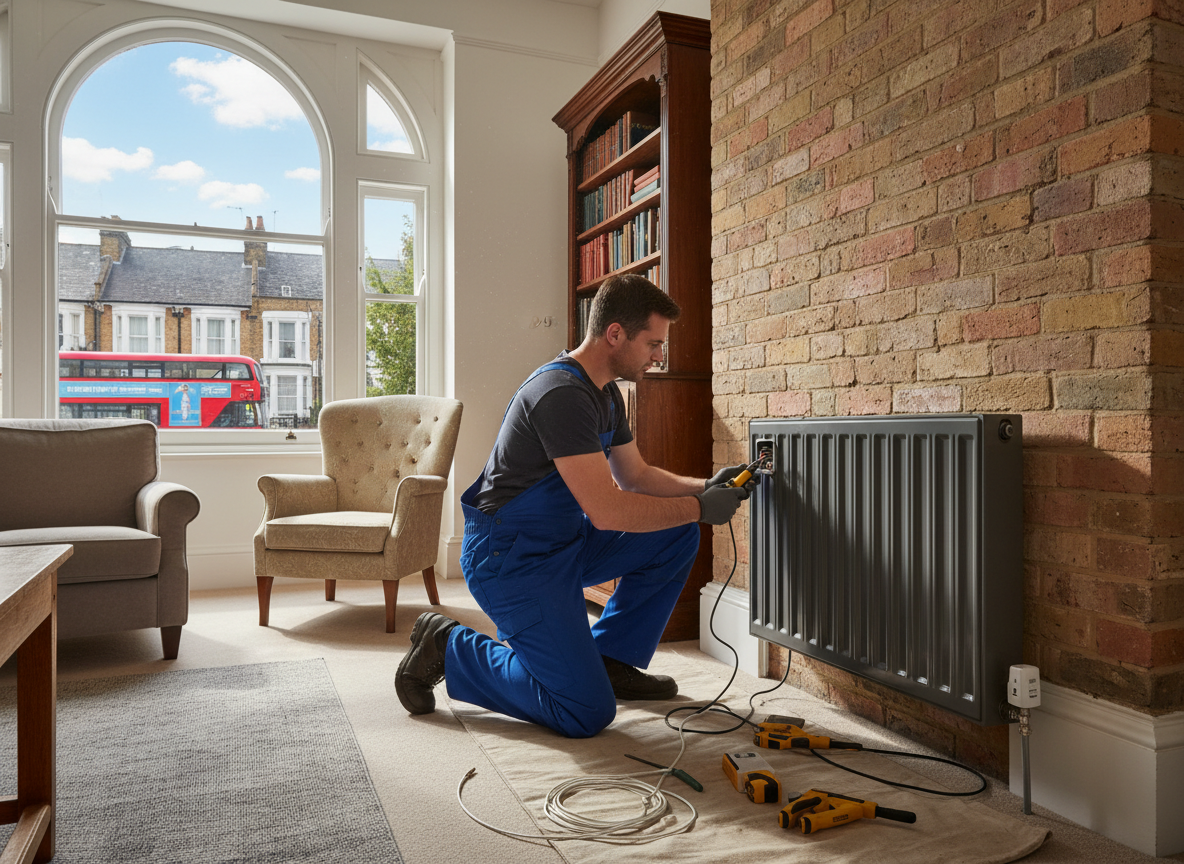
London's Victorian and Edwardian terraces in neighbourhoods like Islington and Camden often feature original wiring that cannot safely support modern electric heating loads. Installers must first map circuits and upgrade consumer units before adding panel heaters or storage heaters, especially where multiple extensions have been added over decades. Damp from the Thames basin also affects placement, as heaters mounted on external walls can suffer from condensation if vapour barriers are not fitted correctly.
Greater London planning rules require notification for any work that affects the electrical supply in listed buildings common around N7 and nearby boroughs. Systems must comply with current Part P regulations, and installers check for asbestos in loft insulation before running new cables. In winter, when temperatures hover around freezing with high humidity, undersized systems quickly lead to complaints, so load calculations account for single-glazed sash windows typical in these homes.
Edge cases include converting night-storage heaters in council blocks where peak-rate tariffs have changed, requiring new controls and sometimes separate metering. Soil conditions around older foundations can shift slightly with seasonal rain, so trunking routes avoid areas prone to minor movement. Always test earth continuity after installation because many properties still rely on older PME supplies that need verification.
Homeowners frequently overlook the need to isolate circuits during works in multi-occupancy buildings, which can trip supplies for neighbours. Proper sequencing prevents this and keeps disruption low in dense streets around North Road.
Technician insight
In London, the thing that catches most people out with Electric Heating Installers near me is the hidden state of wiring in 1890s terraces around Islington; one loose earth connection discovered during the survey can add a full day before heaters can be connected safely.
Islington Terrace Conversion
A homeowner in a North London Victorian terrace wanted electric panel heaters after gas supply issues. We found the original lighting circuit was overloaded and shared with neighbours. New dedicated radials were run from the consumer unit, heaters positioned away from damp external walls, and the system commissioned without affecting adjacent properties.
How it works
- 1
Site Survey
Visit the property to inspect existing wiring, consumer unit condition and room layouts in London homes.
- 2
Load Calculation
Measure heat loss considering sash windows and insulation levels common in Greater London terraces.
- 3
System Design
Specify heater types and controls suited to the electrical supply and tariff available at the address.
- 4
Installation
Run new circuits, mount heaters and fit controls while isolating only the necessary sections.
- 5
Testing And Handover
Verify earth continuity, demonstrate operation and leave documentation for the homeowner.
Pricing
Upfront written quotes provided after survey; final cost depends on wiring upgrades needed.