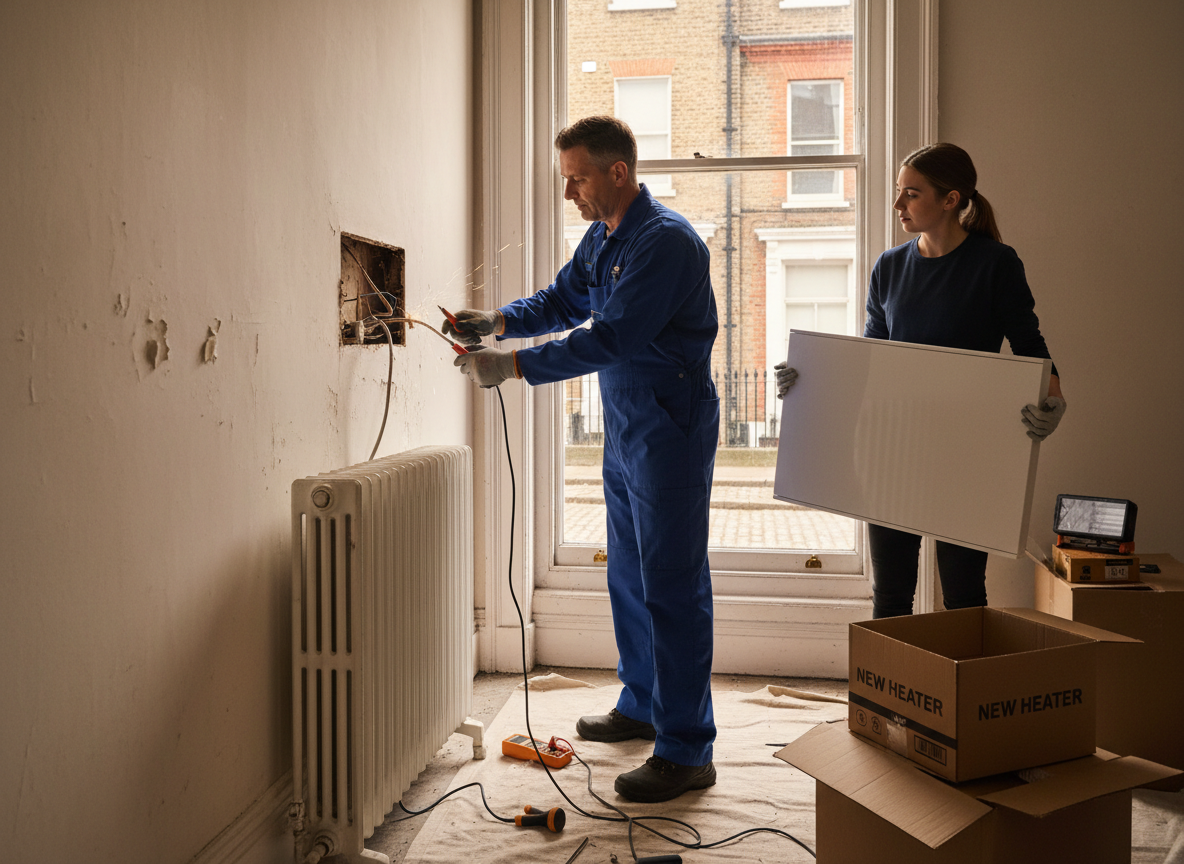
Replacing electric heating in London properties often means working around the limitations of pre-1930s wiring and limited consumer units found in Islington and Hackney terraces. Many systems still rely on outdated night-storage heaters that no longer meet modern efficiency standards once winter temperatures drop below five degrees. We assess existing circuits first because adding load without upgrades risks tripping breakers during peak evening use. Proper removal also requires isolating asbestos-containing boards common in 1960s blocks before new panels are mounted.
Damp London winters accelerate corrosion on older electric radiators, especially in basements and ground-floor flats near the Regent's Canal. Replacement jobs here frequently involve rerouting cables through solid walls rather than chasing new runs, which adds time but prevents future damp issues. We always verify earthing arrangements against current IET wiring regulations because many N7 properties still use the old PME system that needs upgrading when heaters are swapped. Skipping this step leaves homeowners exposed to nuisance trips during heavy rain.
Central London apartments present different constraints with restricted access and shared risers that cannot be disturbed without building management approval. In these cases we fit slimline electric panel heaters that match existing skirting profiles while improving response times compared with storage units. Every replacement includes a full load calculation so the supply cable from the meter stays within safe limits, avoiding the overloads we regularly see after DIY swaps in Camden and Haringey.
Technician insight
In London, the thing that catches most people out with electric heating replacement is the hidden state of the original wiring runs in 1890s-1920s terraces around our N7 base; pulling new cable through those lime-plaster walls often turns a half-day job into two days once you start chasing.
Islington Terrace Replacement
A homeowner in a Victorian terrace off the Caledonian Road reported cold spots and frequent trips. We found failed 1980s storage heaters wired to an undersized board. After replacing the consumer unit and fitting modern panels on upgraded circuits, the house now heats evenly without overloads.
How it works
- 1
Site Assessment
Inspect existing heaters, wiring condition and consumer unit capacity at the property in London.
- 2
Removal and Isolation
Safely disconnect and remove old units, checking for asbestos and updating earthing where required.
- 3
New System Installation
Mount modern electric panels or radiators and connect to verified circuits.
- 4
Testing and Handover
Load test the system, confirm even heat distribution and explain controls to the homeowner.
Pricing
Upfront quotes after inspection; final cost depends on property age, wiring condition and number of rooms in London homes.