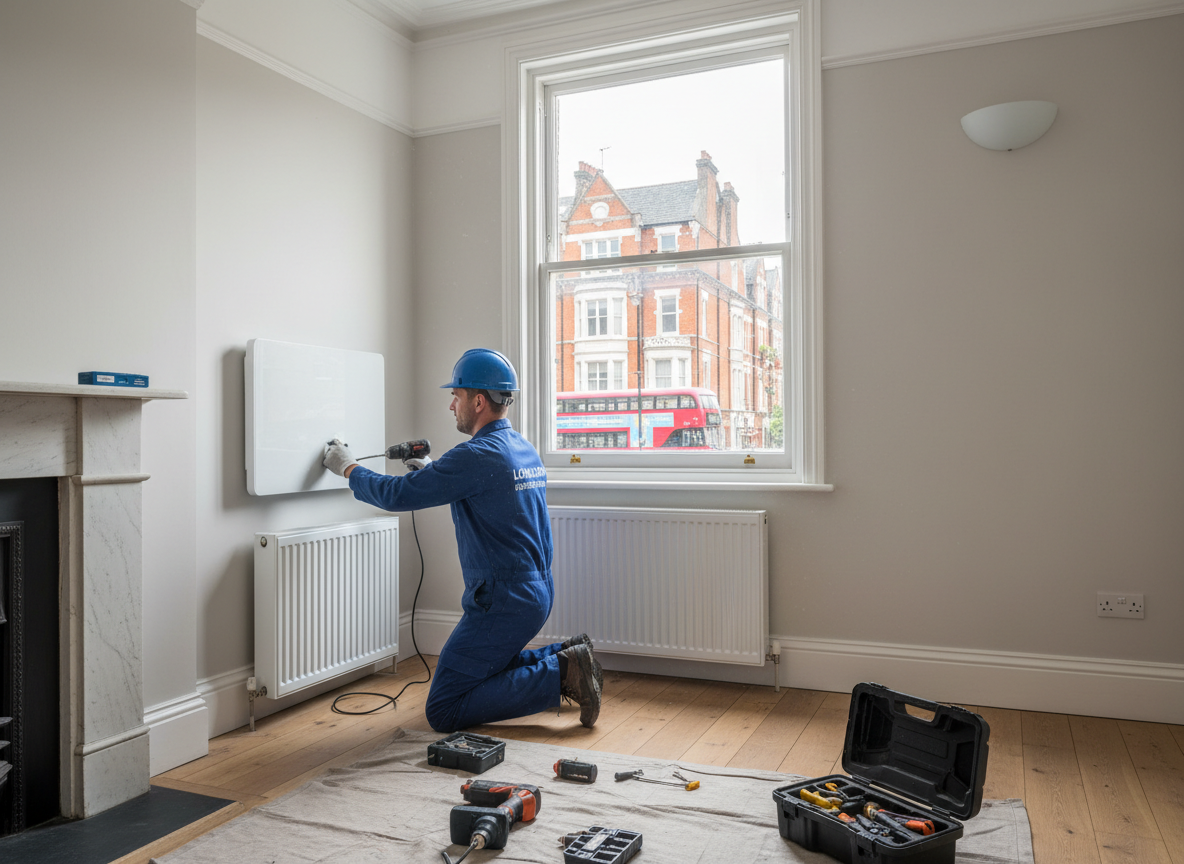
Electric panel heaters suit many London properties where gas central heating is impractical or costly to retrofit. In Islington terraces and N7 flats, installers must first assess the existing consumer unit and ring main capacity, as pre-1970s wiring often lacks the dedicated circuits needed for multiple 1.5–2 kW panels. Adding a new 20 A MCB and 2.5 mm² cable run is common before any heater is mounted. Surface trunking or chasing into lime plaster walls requires care to avoid damaging original cornicing or lath-and-plaster ceilings.
Placement matters in north-facing rooms that lose heat quickly during winter temperature drops. Heaters are positioned on internal walls where possible to reduce condensation risk on single-glazed sash windows typical of the area. Each unit needs a fused spur or double-pole isolator within reach, and installers leave clear access for future removal without disturbing decorations. Smart controls with open-window detection are fitted where clients request them, but the core connection remains hard-wired for reliability.
Edge cases include listed buildings around Canonbury and Highbury where external trunking is restricted and internal routes must follow existing conduits. In converted warehouses near King’s Cross, concrete ceilings limit cable routes, so surface-mounted metal conduit is used instead. All work follows current IET wiring regulations and Building Regulations Part P notification requirements; no shortcuts are taken on earth bonding or RCD protection in older dwellings with shared supplies.
Technician insight
In London, the thing that catches most people out with electric panel heater installer is the state of the wiring in Victorian terraces around Islington and nearby N7 streets. Ring mains installed sixty or seventy years ago rarely cope with several new heaters, so we end up running fresh radials from the consumer unit more often than homeowners expect.
Islington Terrace Panel Heater Upgrade
A homeowner in a three-storey Islington terrace could not run more than two existing storage heaters without tripping the main breaker. We found a 1960s consumer unit with no spare ways and shared neutrals on the lighting circuit. New 20 A radials were run to three rooms using existing floor voids, three 1.8 kW panels were fitted on internal walls, and the supply was upgraded to a 10-way board with RCBOs. The system now runs without trips even on the coldest nights.
How it works
- 1
Site Assessment
Visit the property to inspect the consumer unit, existing circuits and wall construction in London period homes.
- 2
Circuit Upgrade Planning
Calculate load and plan any new cable runs or consumer unit changes required for safe panel heater operation.
- 3
Installation
Mount heaters, run cabling, fit isolators and connect to the new or upgraded circuit.
- 4
Testing and Handover
Test each circuit, demonstrate controls and leave documentation for the homeowner.
Pricing
Upfront quotes provided after survey; final price depends on circuit upgrades required in older London properties.