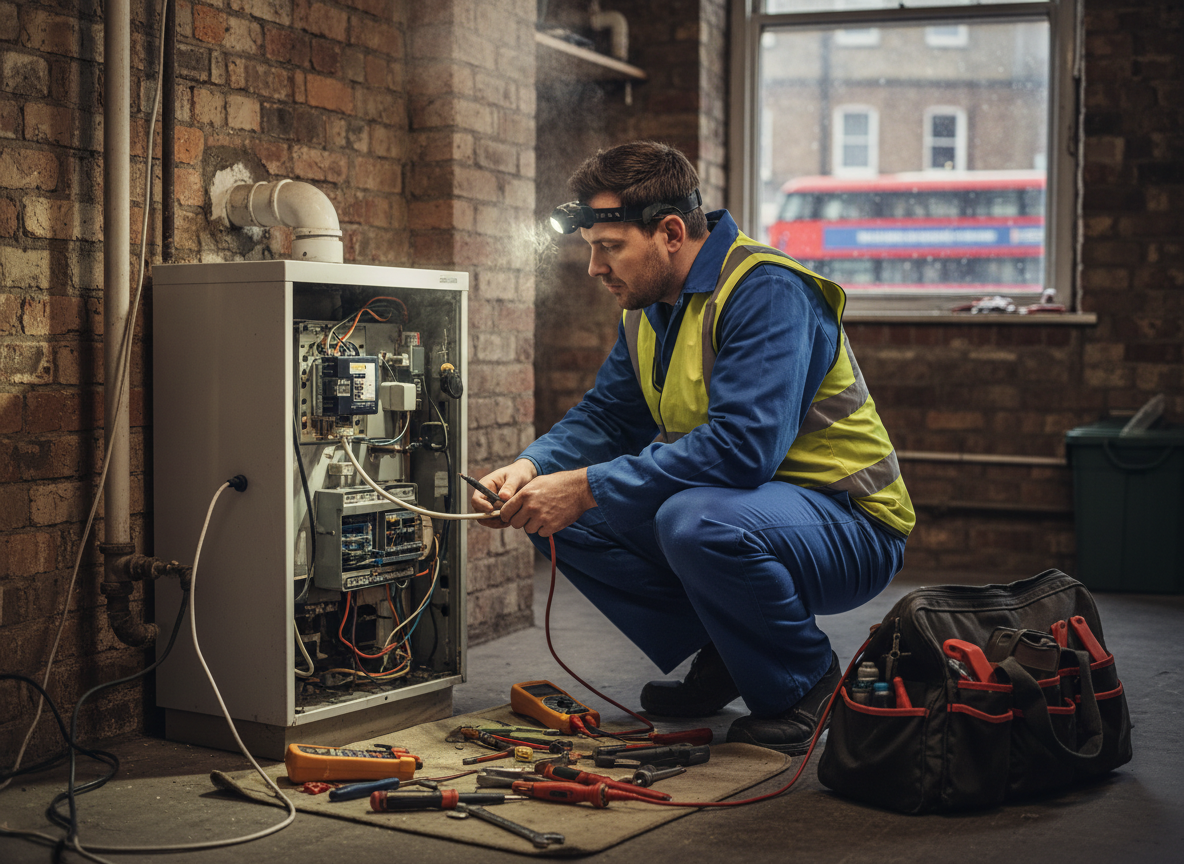
London's older housing stock, particularly the Victorian and Edwardian terraces common in Islington, Camden and Hackney, often features aged electrical circuits that struggle under modern heating loads. When an electric heating system fails during a cold snap, the issue is rarely just the heater itself. Loose connections in consumer units, degraded immersion elements or failed storage heater bricks can all trigger sudden outages, and these faults spread quickly through shared risers in converted flats.
Emergency callouts require isolating the circuit safely before any diagnostic work begins, especially in properties where the original wiring predates current Part P regulations. Technicians must check for moisture ingress around external meter cupboards, a frequent problem in North London basements, and verify that any replacement components meet the higher load demands of continuous-use systems. Rushing this step risks tripping neighbouring properties or creating hidden hot spots behind plaster.
Common Triggers in London Properties
Cold winter nights combined with high humidity in riverside postcodes increase the chance of element failure and thermostat faults. Many homeowners in N7 and surrounding postcodes discover problems only when the system stops responding to timers, often because the original contactors have welded shut after years of daily cycling.
What to Expect on Arrival
A 24/7 team based at Delta House on North Road can reach most central and North London addresses within the hour. The first action is always a full visual inspection of the consumer unit and any external isolators before power is restored for testing.
Technician insight
In London, the thing that catches most people out with emergency electric heating repair is the state of the original wiring runs in pre-1930 terraces around Islington and nearby postcodes. Damp meter cupboards and shared risers mean a single element failure can mask a bigger earthing issue that only shows once the circuit is live again.
Storage Heater Failure in N7 Flat
A top-floor conversion in a North London terrace lost all heating on a January evening. Inspection revealed a failed contactor and heavily oxidised wiring from years of roof-level temperature swings. We isolated the circuit, fitted a new contactor from van stock and re-terminated the incoming tails to restore safe operation before midnight.
How it works
- 1
Initial Call Assessment
Confirm symptoms, property age and access details while dispatching the nearest van from the N7 depot.
- 2
Safe Isolation
Isolate the affected circuit at the consumer unit and test for dead before any internal inspection.
- 3
Fault Diagnosis
Check elements, thermostats, contactors and wiring condition using calibrated meters.
- 4
Repair or Temporary Make-Safe
Replace failed parts where stock allows or fit a temporary safe bypass to restore heat.
- 5
Final Test and Advice
Restore full power, run the system through cycles and leave written guidance on any follow-up work needed.
Pricing
Upfront quote provided on site once the fault is diagnosed; rates reflect time of call and parts required.