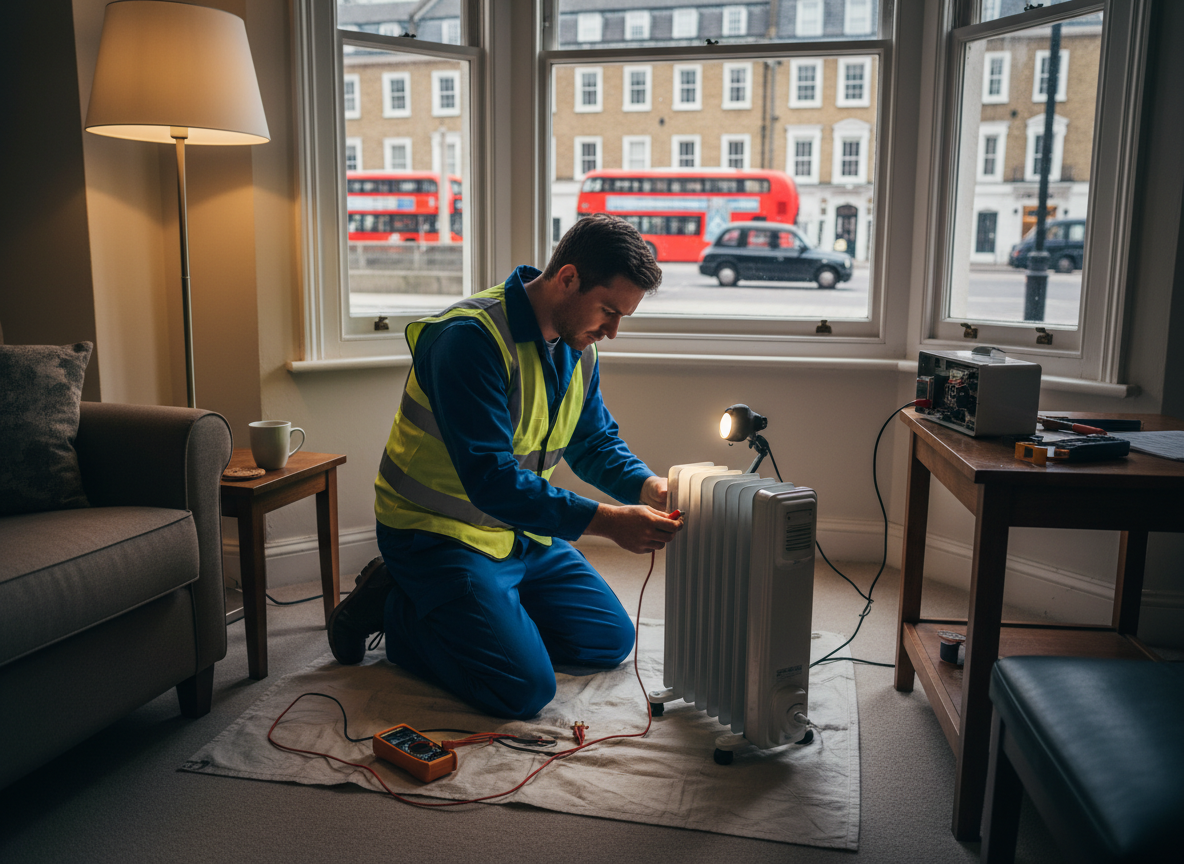
London's mix of Victorian terraces, 1930s semis and post-war flats means electric radiators often fail due to aged wiring, corroded connections or overloaded circuits that predate modern heating demands. Cold winter spells push these systems hard, with damp from the Thames valley accelerating element breakdown in ground-floor rooms. We attend 24/7 from our base at Delta House, 4-10 North Road, N7 9EY, carrying common spares for Creda, Dimplex and older storage heaters to restore heat the same visit whenever possible.
A frequent edge case is radiators wired through lighting circuits or with shared neutrals in converted houses around Islington and Camden; isolating the fault without tripping other circuits requires careful testing before any component swap. We always check RCD protection and earthing continuity first, because many older properties still lack adequate earth paths for the higher currents modern radiators draw. Homeowners sometimes attempt DIY element replacement and leave live terminals exposed behind the cover, creating a shock risk we correct on arrival.
When a radiator trips the consumer unit repeatedly, the cause is rarely the heater itself; we trace back through junction boxes in lofts or under floorboards common in North London stock. Replacement elements must match the original wattage and fixing centres or the unit overheats at the brackets. We carry both 1 kW and 1.5 kW finned elements plus thermostats to handle the range of units installed across Greater London.
After any repair we leave the radiator cover off briefly so the customer can see the new part and confirm the fix before reassembly. This avoids callbacks when an intermittent fault returns during the next cold front.
Technician insight
In London, the thing that catches most people out with emergency electric radiator repair is the number of 1970s and 1980s conversions where radiators were added on lighting circuits without upgrading the cable or breaker; the extra load trips the whole board during a cold snap and homeowners assume the radiator itself is dead.
Highbury Terrace Failure
A radiator in a converted Victorian house stopped working mid-evening during a frost. We traced the fault to a perished flex and shared neutral in the loft. Replaced the cable run and element, restored the circuit and confirmed stable operation before leaving.
How it works
- 1
Call and Triage
We take the details over the phone, confirm the property type and symptoms, then dispatch the nearest van from our N7 base.
- 2
On-Site Diagnosis
Isolate the circuit, test for earth faults, check thermostat and element resistance, and inspect wiring back to the consumer unit.
- 3
Repair or Replace
Fit new element, thermostat or terminal block using parts matched to the existing unit; re-test insulation resistance before restoring power.
- 4
Final Safety Check
Verify RCD operation, confirm no shared neutrals remain, reassemble and run the radiator through a full cycle with the customer present.
Pricing
Upfront quote given after inspection; price depends on parts required and access to wiring runs.