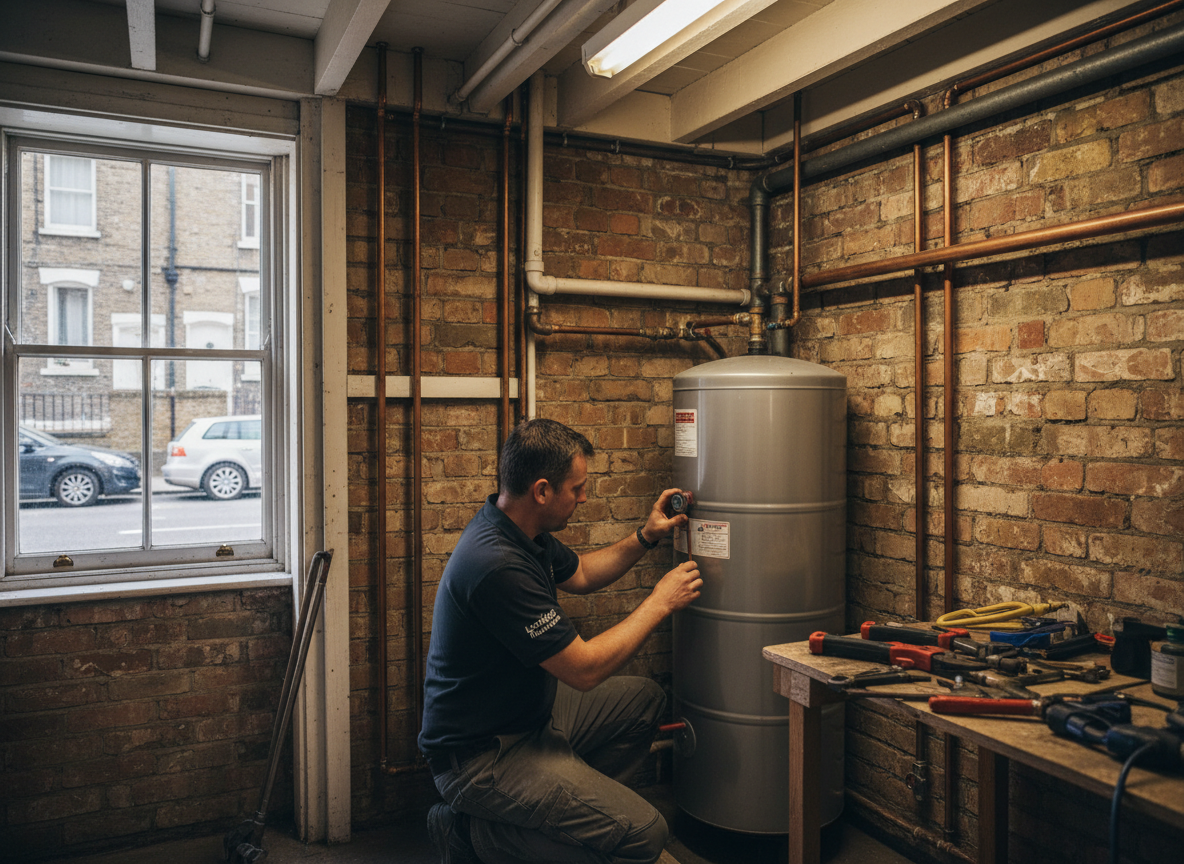
London's older housing stock in areas like Islington and Camden often features narrow airing cupboards and outdated immersion setups that require careful cylinder sizing to avoid pressure issues. Electric heating installers must account for the city's variable winter temperatures, where a sudden cold snap increases demand on hot water systems and can expose poor insulation in pre-1970s properties. Proper earthing and circuit protection become critical when replacing cylinders in these buildings because many still rely on older consumer units that were never designed for modern immersion loads.
Installing a new cylinder in a London flat or terrace involves checking the existing pipework for corrosion from hard water common in the Thames region and ensuring the new unit fits without major structural changes. Electric systems need precise thermostat calibration to prevent overheating in compact spaces where ventilation is limited. Homeowners in N7 and surrounding postcodes frequently encounter problems when cylinders are swapped without upgrading the dedicated circuit, leading to repeated trips or inefficient running costs.
A water cylinder installer working in Greater London must also navigate access restrictions in multi-storey buildings where heavy units have to be carried up narrow stairwells. Soil conditions around older foundations can affect external pipe runs if any ground-level work is needed, though most jobs stay internal. Choosing the right cylinder capacity depends on household size and whether the property uses off-peak tariffs, which remain popular in many North London terraces.
Common Cylinder Types in London Homes
Electric heating systems in the capital often use vented or unvented cylinders paired with immersion heaters. Vented models suit properties with header tanks in the loft while unvented units deliver higher pressure but require additional safety controls and annual checks.
Technician insight
In London the thing that catches most people out with Water Cylinder installer is the state of the original wiring in Victorian terraces around Islington and N7. Many still have 1960s consumer units feeding the immersion that simply cannot handle a modern high-recovery cylinder without tripping or overheating the cable.
Islington Terrace Cylinder Swap
The homeowner reported inconsistent hot water and rising bills in their 1890s terrace. We found the original galvanised cylinder had corroded internally and the immersion element was shorting. We replaced it with a correctly sized unvented unit on a dedicated circuit and added proper insulation to the pipe runs in the airing cupboard.
How it works
- 1
Site Assessment
Visit the property in London to inspect the existing cylinder location, pipework condition and electrical supply capacity.
- 2
System Design
Select the correct cylinder size and type based on household demand and whether the home uses standard or off-peak electricity tariffs.
- 3
Installation
Remove the old unit, fit the new cylinder with proper insulation and connect to both water and electric supplies while maintaining all safety valves.
- 4
Testing and Handover
Check for leaks, verify thermostat operation and explain daily use plus maintenance requirements to the homeowner.
Pricing
Upfront quotes provided after site visit; final cost depends on cylinder size, access and any required electrical upgrades.